
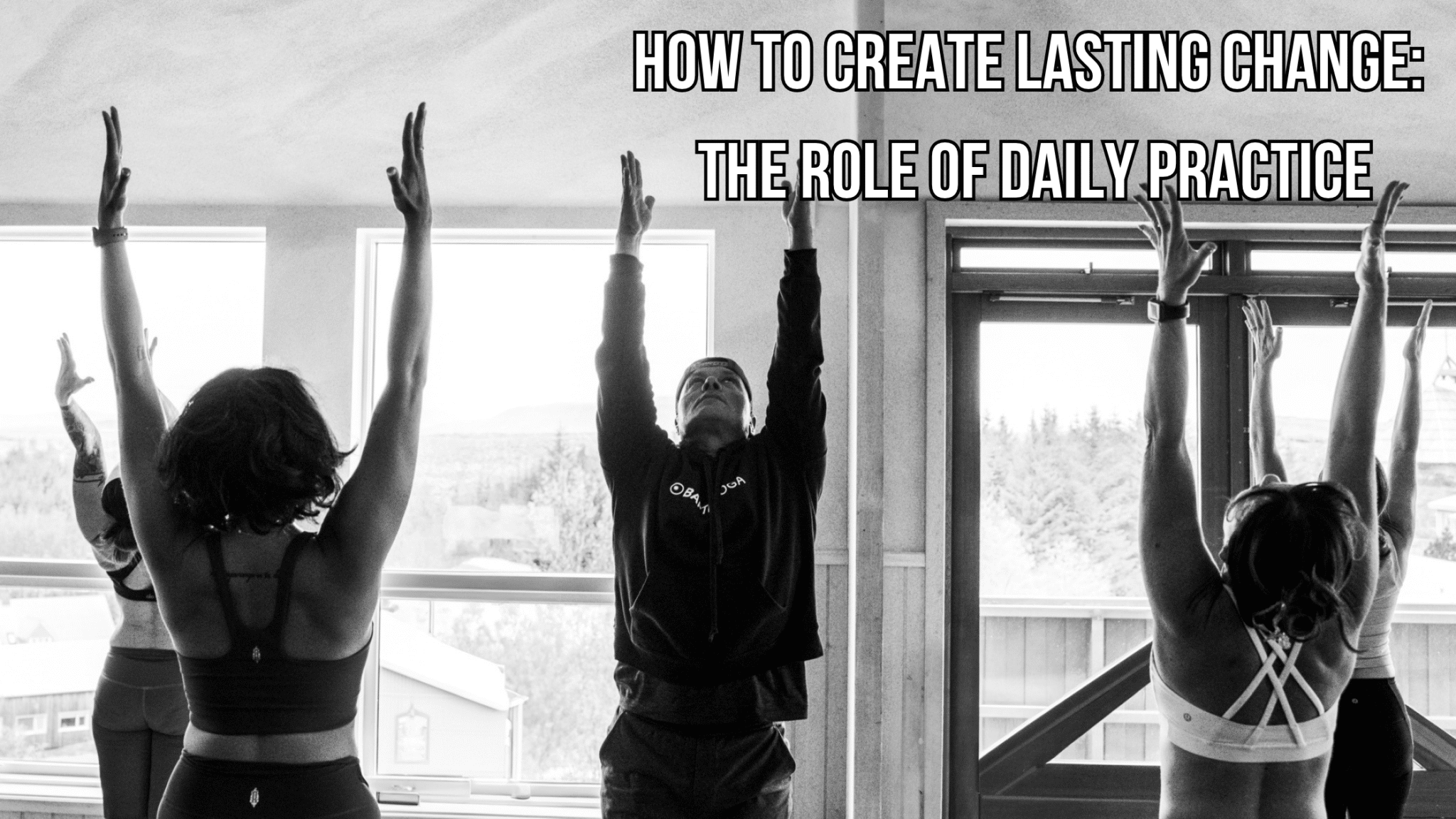
We often think change begins with a decision. We decide to get healthier, become better teachers, lead differently, or stop repeating a pattern that isn’t working.
But a decision is only a starting point. What matters is what happens when the initial excitement wears off and you’re faced with the same choices, reactions, and habits you’ve had for years.
This is where practice becomes more than something you do on a yoga mat.
In the Baptiste Method, physical practice, meditation, and inquiry offer different ways to work with yourself. You move your body, observe your mind, and begin to recognize the patterns that shape how you respond to life. The point isn’t to become someone who never struggles. It’s to develop the awareness and willingness to meet a challenge differently.
Why Is It So Difficult to Change Old Habits?
Familiar patterns can feel automatic. A difficult conversation comes up, and you react before you’ve considered another response. A challenge appears, and you retreat to what feels comfortable. You tell yourself the same story about what you can or cannot do.
Often, the first step isn’t forcing yourself to behave differently. It’s noticing what’s happening.
In your physical practice, you might recognize the moment you want to come out of a pose because it feels uncomfortable. That moment gives you an opportunity to observe your response. Can you stay present, breathe, and make a conscious choice about what comes next?
This doesn’t mean pushing past your limits or ignoring what your body needs. It means learning to distinguish between a genuine need to stop and the impulse to avoid discomfort.
That awareness can become useful well beyond the mat.
Try This: A Three-Step Inquiry Practice
The next time you notice yourself reacting to a situation in a familiar way, pause before acting.
1. Notice the pattern.
What just happened? Describe the situation without adding a judgment or explanation. Start with what you can actually observe.
2. Examine the story.
Ask yourself: What am I telling myself about this situation?
Are you assuming you know what someone else thinks? Are you treating an old belief as an unquestionable fact? Are you anticipating failure before you’ve given yourself a chance to respond?
3. Choose your next action.
Ask: What is one response available to me that I haven’t considered?
You don’t need to solve the entire situation. Identify one action you can take consciously instead of repeating your usual reaction.
Try this once a day for a week. Notice what changes when you create a little space between what happens and what you do next.
The practice isn’t about getting every response right. It’s about becoming more aware of the choices available to you.
Make Your Practice Part of Your Life
Awareness grows through repetition. A single moment of insight can be valuable, but returning to a practice gives you opportunities to work with the same tendencies in new situations.
Start with something you can sustain. Set aside time for movement, sit quietly for meditation, or write down one question you want to investigate. Then pay attention to how those practices influence the way you meet the rest of your day.
If you’re ready for more structure, there are different ways to take the next step.
Baptiste Momentum Academy offers tools, practices, and structure for creating shifts in how you live and lead. If you’re a yoga teacher looking to strengthen how you communicate and deliver the Baptiste Method, Teacher’s Edge focuses on developing your skills as an instructor. And if you want a guided commitment to daily movement, meditation, and self-inquiry, 40 Days to Personal Revolution returns in January 2027, with online practices and live Tuesday calls with Baron and the team.
Change isn’t something you have to wait for. It’s something you can begin practicing.
Explore the path that fits where you are now: